This study, published in Nature Microbiology, presents a comprehensive phenogenomic map of the fungal genus Trichoderma, which is widely used in sustainable agriculture for crop protection and soil health. By combining large-scale genomic sequencing with...
Publications
Boosting angiogenesis experimentally in ovo by biofunctionalizing collagen membranes with platelet-rich fibrin and hyaluronic acid: implications for regenerative oral surgery?
A study published in the International Journal of Implant Dentistry investigated the angiogenic potential of collagen membranes biofunctionalized with platelet-rich fibrin (PRF) and hyaluronic acid (HA) using an in ovo model. Different combinations of advanced and...
Co-targeting of VEGFR2 and PD-L1 promotes survival and vasculature normalizationin pleural mesothelioma
This study explores a novel therapeutic strategy for pleural mesothelioma, a highly aggressive cancer with limited treatment options. The researchers investigated the combined inhibition of VEGFR2, a key regulator of angiogenesis, and PD-L1, an immune checkpoint...
Capturing the Heterogeneity of the PDAC Tumor Microenvironment: Novel Triple Co-Culture Spheroids for Drug Screening and Angiogenic Evaluation
This study explores the complexity of pancreatic ductal adenocarcinoma (PDAC) and its tumor microenvironment (TME), which plays a crucial role in treatment resistance. To better replicate this environment, the researchers developed triple co-culture spheroid models...
Bridging imaging-based in vitro methods from biomedical research to regulatory toxicology
This article published in the Archives of Toxicology, addresses the integration of advanced imaging techniques into regulatory toxicology frameworks. It highlights the increasing use of imaging technologies in biomedical research and experimental toxicology to obtain...
AI Image Analysis and Other Emergent Technologies to Support Adipose Tissue Studies
The study highlights the growing interest in adipose tissue as an endocrine organ and its role in conditions like obesity, diabetes, cardiovascular disease, and cancer. Advanced technologies such as 3D cell cultures and Organ-on-a-Chip models are improving in vitro...
Glycosaminoglycans Modulate the Angiogenic Ability of Type I Collagen-Based Scaffolds by Acting on Vascular Network Remodeling and Maturation
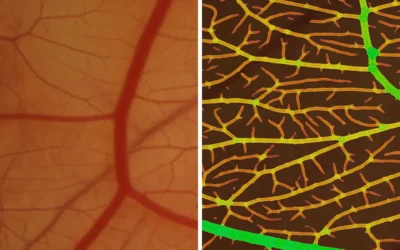
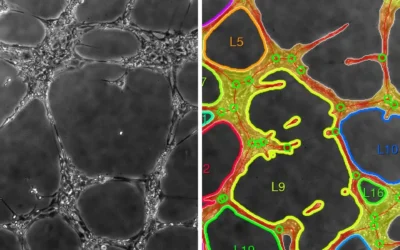
The study explores how glycosaminoglycans (GAGs) influence the angiogenic properties of type I collagen-based scaffolds. Researchers incorporated GAGs into collagen scaffolds and used the IKOSA CAM Assay and Network Formation Assay to evaluate vascular network...
Artificial Intelligence (AI) Based Analysis of In Vivo Polymers and Collagen Scaffolds Inducing Vascularization
The study evaluates the vascularization potential of two collagen-based scaffolds (2D and 3D structures) and a non-collagen scaffold implanted on the chick embryo chorioallantoic membrane (CAM). The researchers utilized classical stereomicroscopic imaging enhanced...
Analysis of Osteosarcoma Cell Lines and Patient Tissue Using a 3D In Vivo Tumor Model—Possible Effects of Punicalagin
In this study, researchers investigated the potential of punicalagin as a supplementary treatment for osteosarcomas, the most prevalent primary malignant bone tumors affecting children, adolescents, and young adults. Despite current therapies like surgery and...
AI-Enhanced Blood Cell Recognition and Analysis: Advancing Traditional Microscopy with the Web-Based Platform IKOSA
Traditional pathology utilizes stained blood smears viewed through microscopy, a technique still prevalent despite technological advancements. Typically, manual human assessment accompanies automated methods, maintaining simplicity but lacking comprehensive cell...
Join our newsletter
Be the first to receive free tips about image analysis, newest articles and publications!